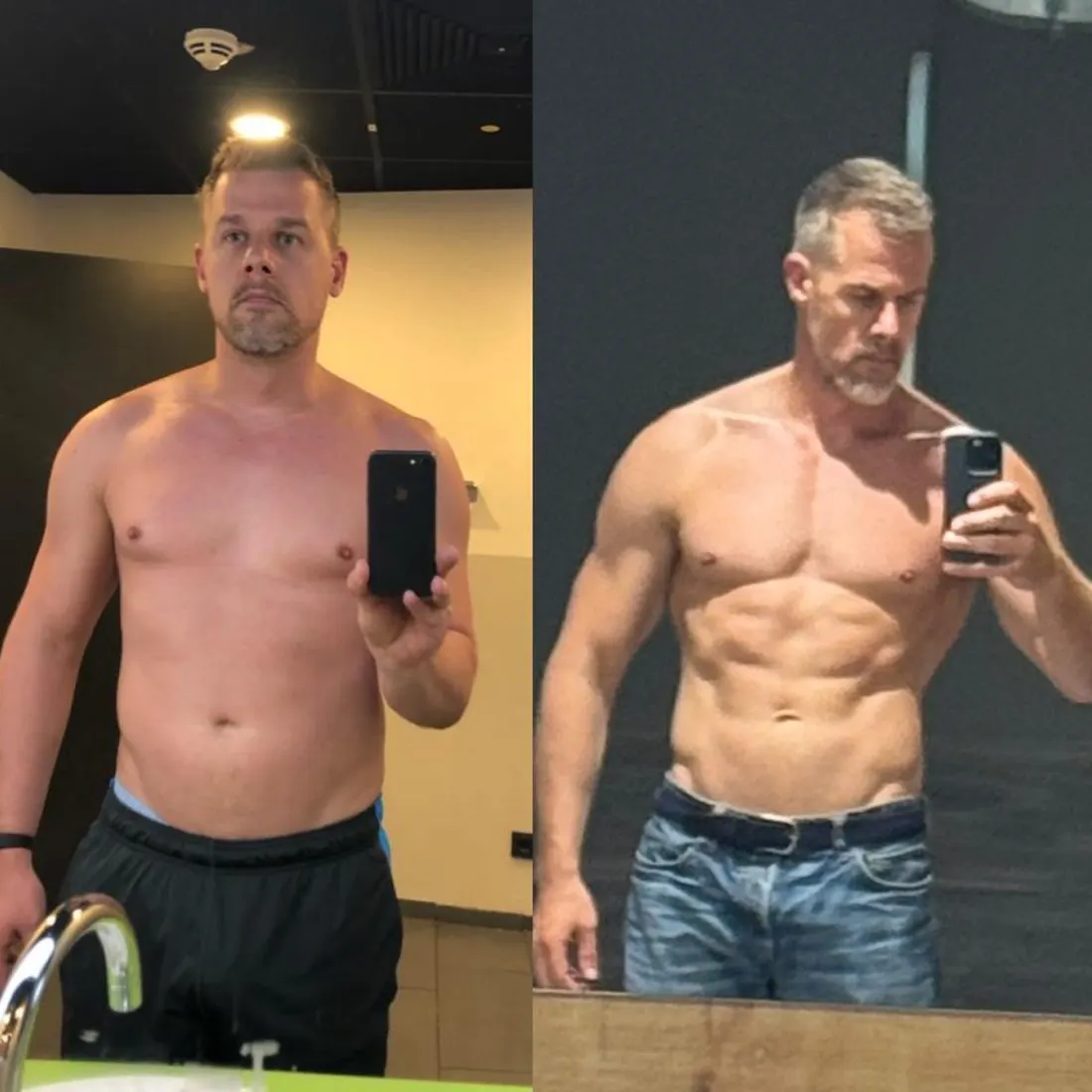
Starting point: training experience, but too little progress
Gunther was already athletic, self-employed and disciplined. The 48-year-old managing director had even worked with another personal trainer before. Even so, he didn't manage to build the muscle mass he wanted. He trained about twice a week, but didn't apply the necessary training stimulus consistently enough and had no sufficiently targeted nutrition strategy.
A plan Gunther can also follow on his own
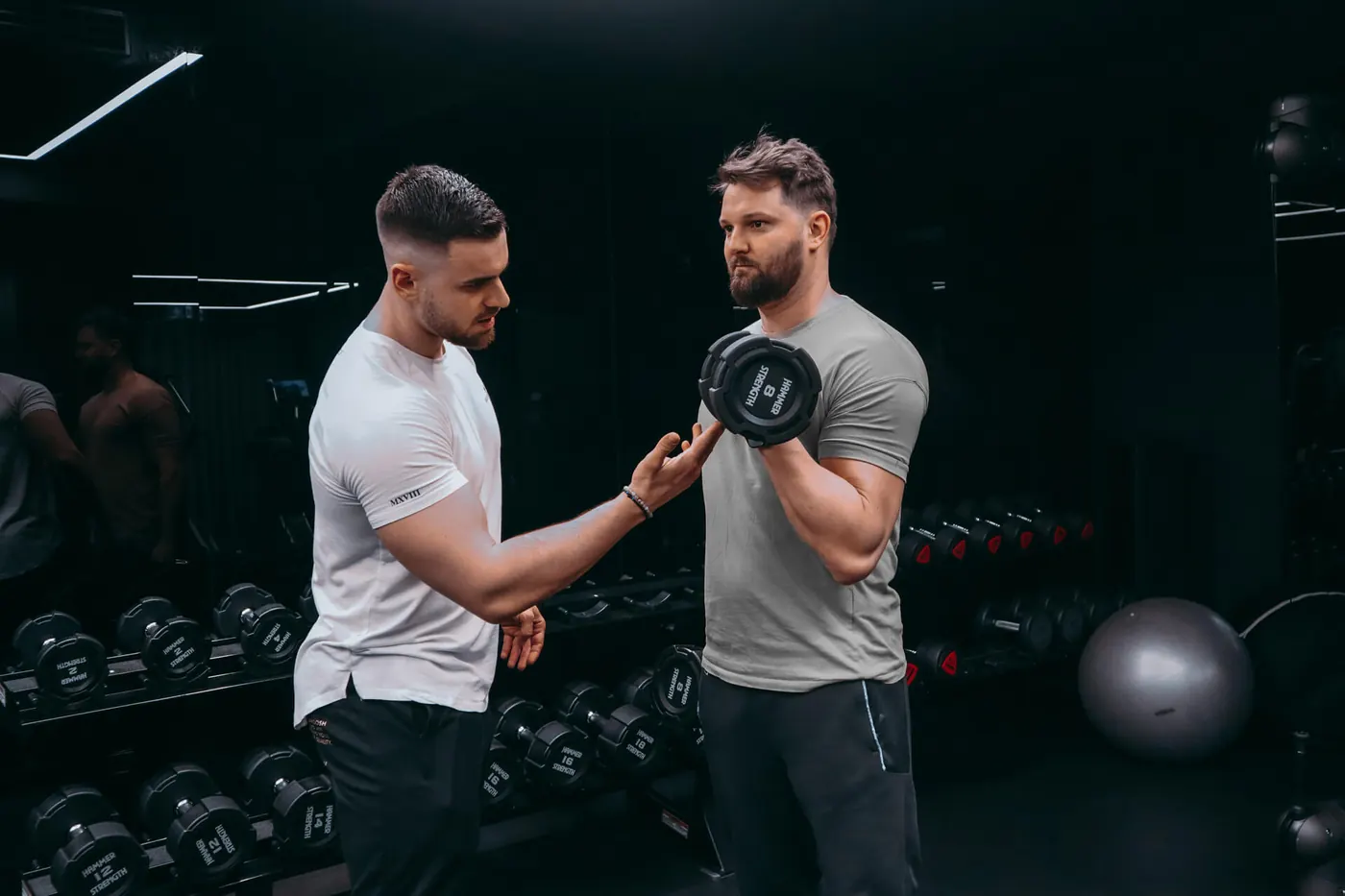
We developed a clear training plan with effective exercises, understandable progression and high training quality. We used the shared personal training sessions especially for areas Gunther liked training less on his own, such as the legs. Over the years he trained three to five times a week in phases, and today often about three times. We adjust his plans as needed instead of constantly swapping everything out unnecessarily.
Nutrition during the building phase: eating more, with a system
To build muscle, we had to raise his energy intake deliberately. Gunther followed the nutrition strategy very conscientiously and reached a body weight of about 105 kg in one building phase. What mattered was that the higher calorie intake fit his training and the development he wanted.
The turning point: from rough guidance to Excel and an app
A particularly big step forward came when we recorded his nutrition more precisely. At first we still worked without detailed tracking. Later we switched to an Excel sheet: the actual calories and macronutrients became clearly traceable for the first time. By our shared experience, this change brought a noticeable leap forward. Gunther now uses the app, which makes logging and ongoing monitoring easier still. The numbers helped him apply his discipline more precisely, and gave us a better basis for adjustments.
Around 12 kg lost, without giving up his social life for good
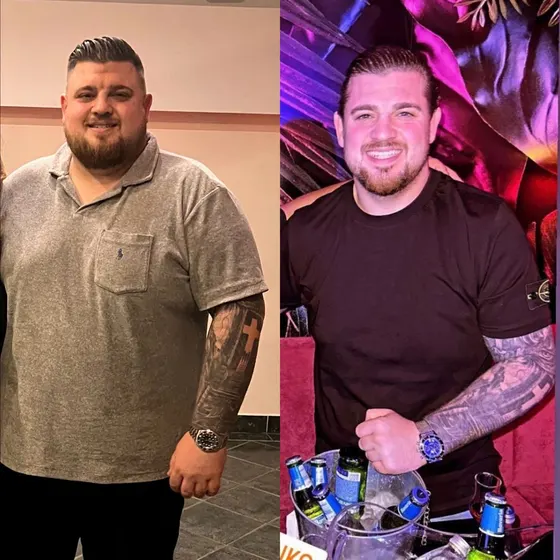
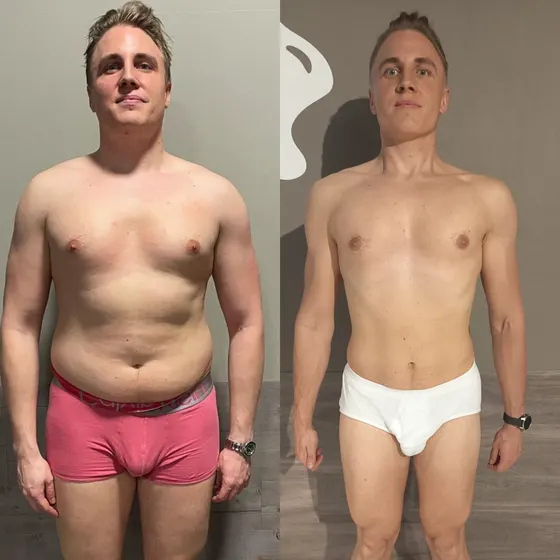
After the building phase came a diet in which Gunther lost around 12 kg. During a first diet phase he largely gave up alcohol and even stuck to water in the beer garden. Later we developed a more flexible approach to social occasions. Even a beer or a visit to the Oktoberfest could fit into the overall strategy, as long as the longer-term calorie balance was right.
Setbacks, injuries and consistency
Over more than seven years, not every phase went in a straight line. Shoulder problems limited him at times; later he had problems with his elbow. When issues like these came up, we adapted the training and brought in physiotherapy support. Problems weren't simply trained away. After busy weeks at work, fixed appointments also helped him get back into a routine.
My conclusion
Gunther shows how valuable long-term, level-headed coaching is. It doesn't always take more exercises or products. In his case, a good plan, intense and clean sets, suitable calorie control and later precise tracking with Excel and an app made the difference. That let us combine muscle building, dieting and everyday life sensibly over the years.
Individual experience, not a guarantee of success. Your progress depends on your starting point, your daily life and how you put it into practice.