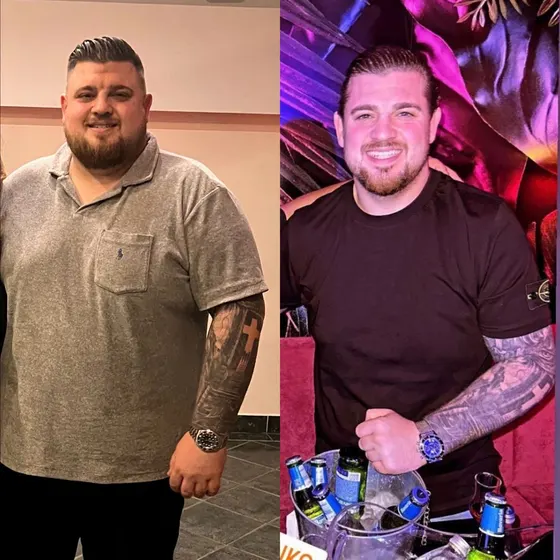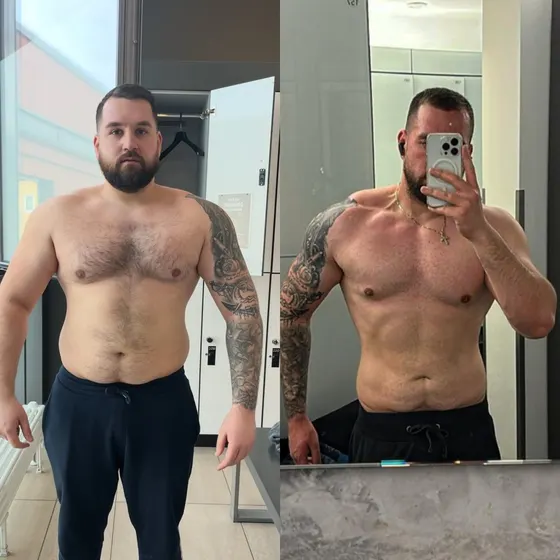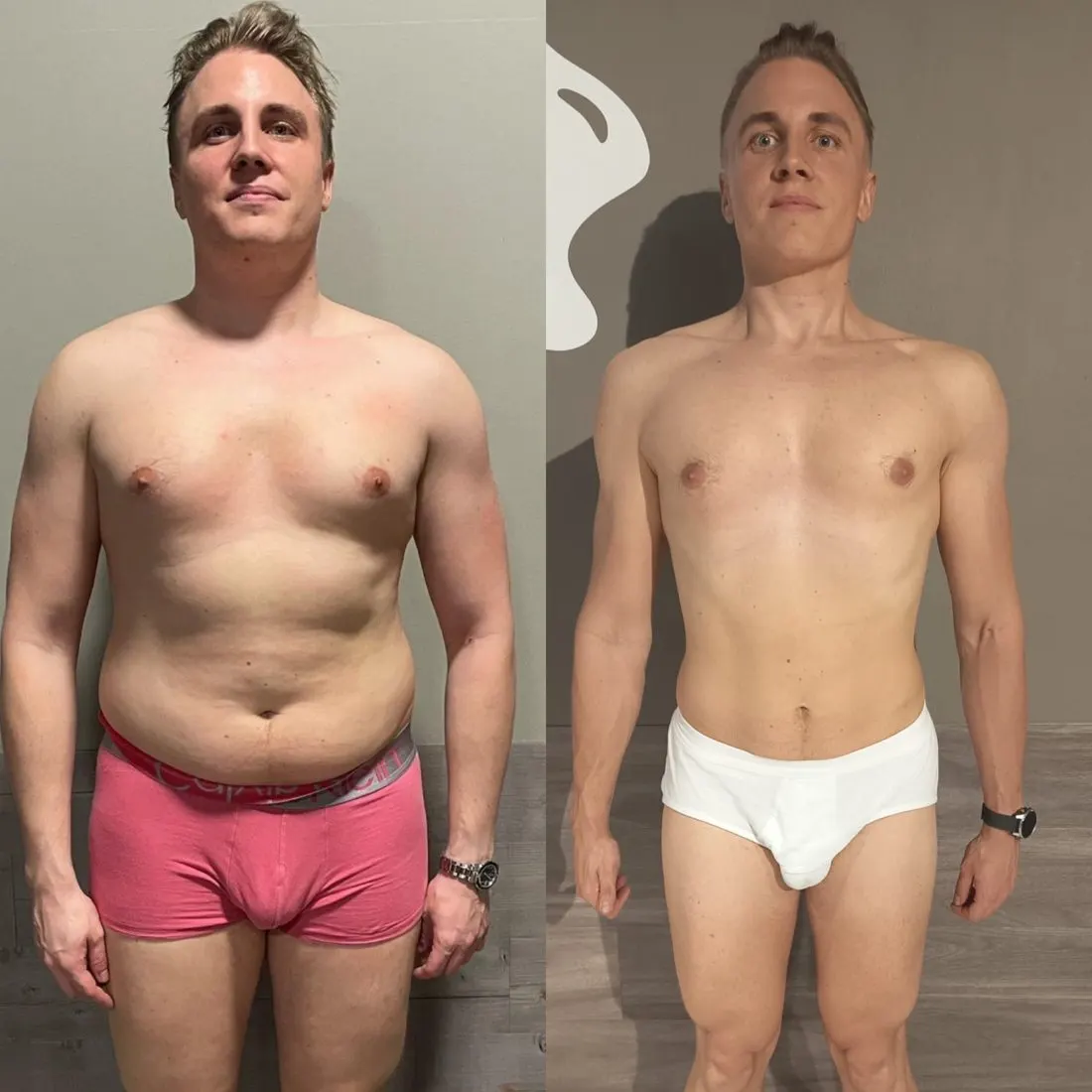
The starting situation
Robert works in a laboratory and had a very stressful working life. Before we started working together, he had practically no experience with strength training. His diet was poorly structured and often included fast food and heavily processed foods. He also lacked basic coordination skills for many gym exercises.
Why we started with machines
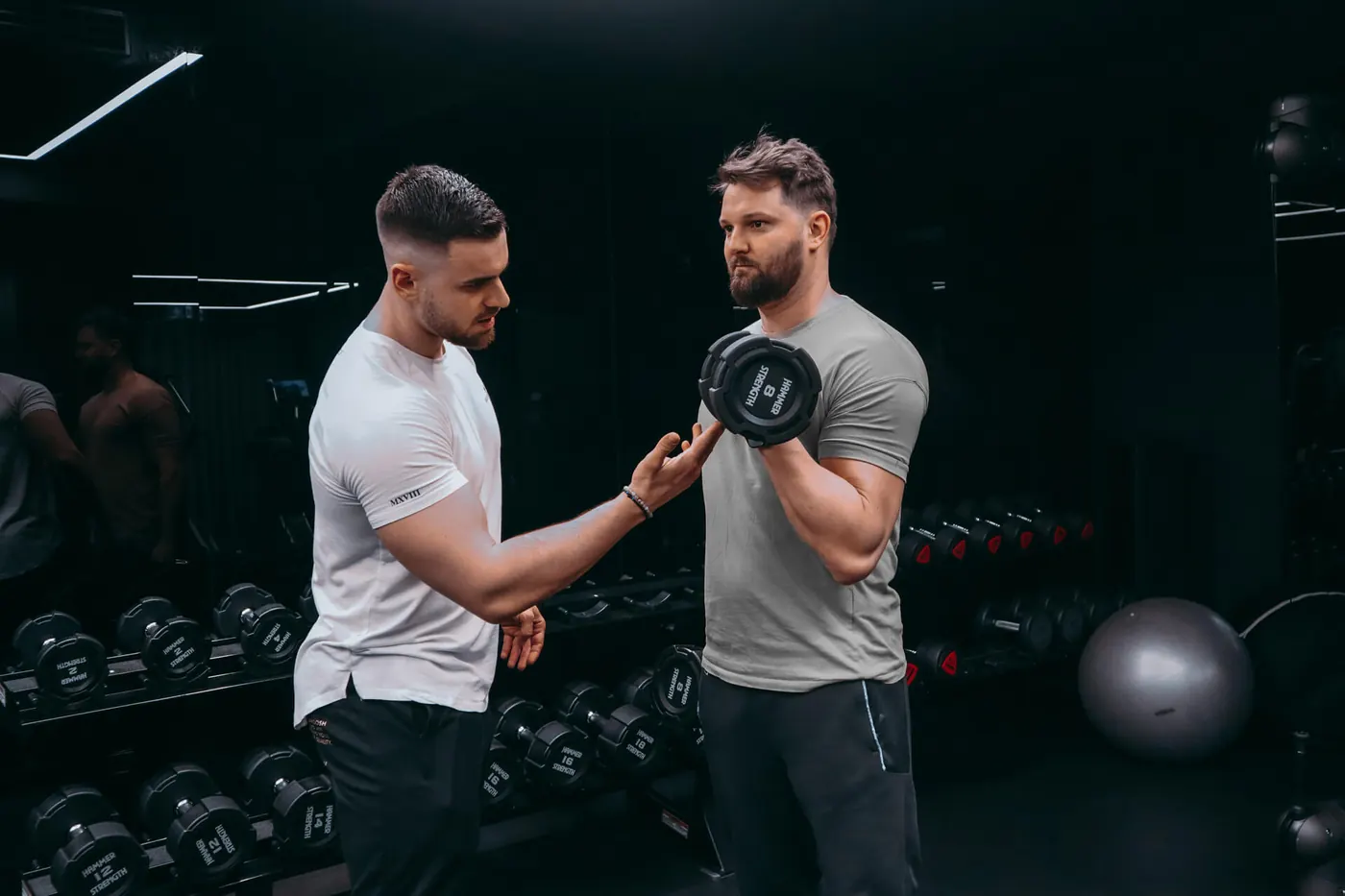
In the first sessions it became clear that balance, coordination and consciously activating specific muscles were hard for him. So we started with guided machines, where he could learn the movements in a more controlled way. Even so, the training was meant to be effective from the start: once his technique was stable, we increased the load step by step. As his confidence grew, we brought in more and more free weights.
The first diet phase: consistent nutrition and 18 kg of weight loss
We restructured his nutrition and began with a relatively sizeable calorie deficit. Robert followed the measures extremely consistently and lost around 18 kg within just three months. This pace can't be transferred to other people and was not a general recommendation for all clients.
Putting setbacks under stress into perspective
On particularly demanding days, Robert occasionally ate more than planned. We didn't treat that as failure. Instead of reacting with punishment training or excessive restriction, he returned to his normal routine the next day. This attitude helped him stick with it over a longer period.
Blood values, recovery and supplements
Robert had his blood values checked regularly. Among other things, his triglycerides were unfavourable; possibly LDL cholesterol was affected too. We discussed the results and took nutrition, exercise and recovery into account in his coaching. Over time, his blood lipid values developed positively. No clear cause can be derived from this. We also discussed an individual supplement routine with omega-3, vitamin D, zinc and ashwagandha. We expressly do not claim that these supplements improved his blood values or medically treated his stress. Abnormal lab values and persistent symptoms should be assessed by a doctor.
After the weight loss: more energy for building muscle
After the strong initial weight loss, we raised his calorie intake again and shifted the focus to building muscle. Robert's coordination and strength improved noticeably. Free-weight exercises that were barely possible at first are now part of his training. We are still working together.
My conclusion
With Robert, the coaching was about more than changing his diet. We first had to build basic movement skills, create an effective training stimulus and later switch the strategy from weight loss to building muscle. His progress goes well beyond the number on the scale.
Individual experience, not a guarantee of success. Your progress depends on your starting point, your daily life and how you put it into practice.