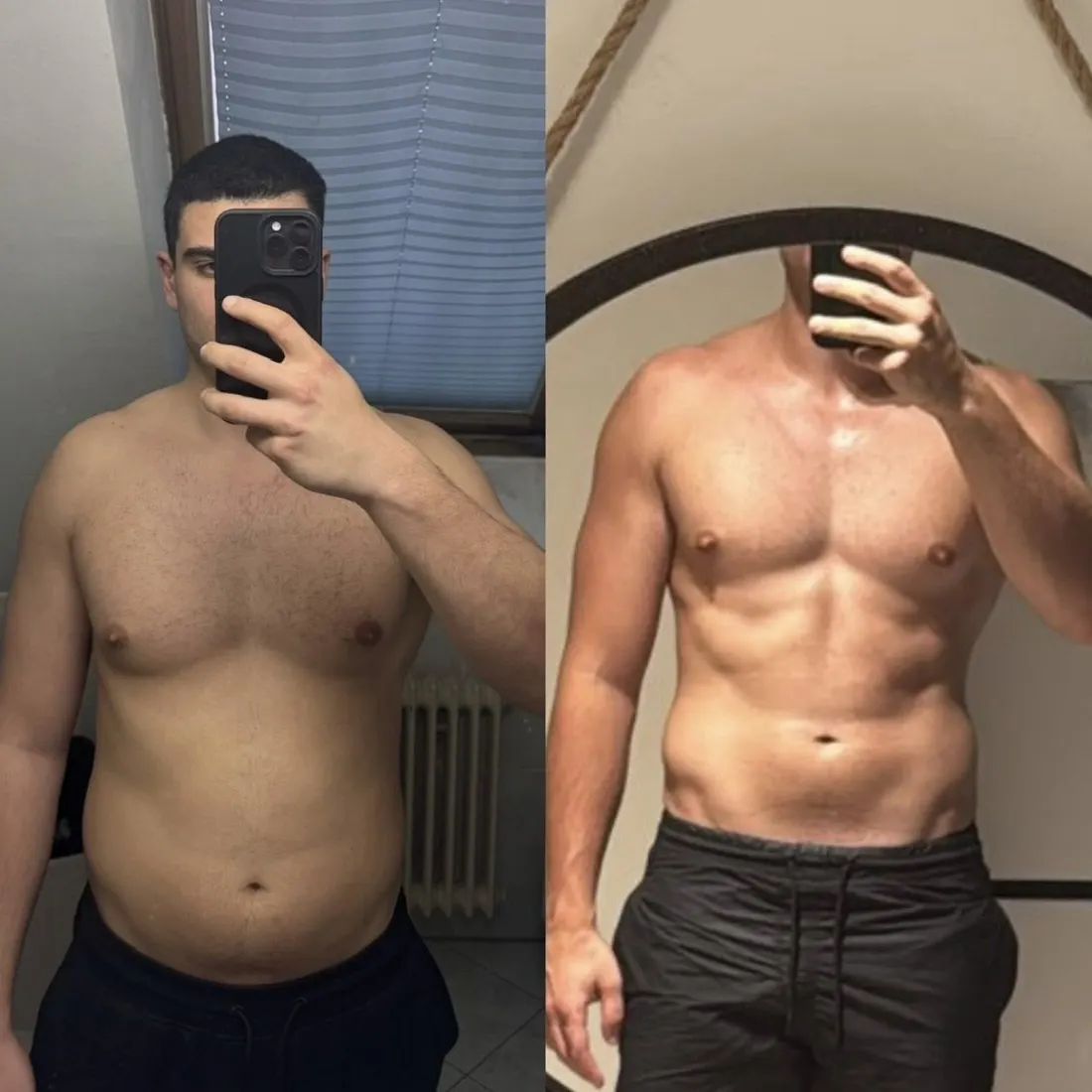
Starting point: hard training without the shape he wanted
I already knew Christos from the gym. He was about 28 years old, trained very hard and brought a lot of commitment. Even so, he was not satisfied with his physical progress. He weighed around 96 kg and wanted to become more defined. At first he was reserved about coaching. After he moved away, he finally decided to work together remotely.
Why more training was not the answer
Christos had already tried calorie deficits before. At the same time, his training load was enormous: many training days, numerous exercises, lots of sets and high rep counts. This combination could make recovery harder and put extra strain on sticking to a diet. That does not mean stress generally blocks fat loss. But it did mean we had to manage his overall load more sensibly instead of adding even more training.
Deliberately reducing training volume
We cut unnecessary extra exercises and concentrated on effective movements. Often we worked with about two high-quality working sets and lower rep ranges. The aim was to deliver the key muscle stimuli without tiring him further with superfluous volume. For an already very ambitious client, training less was an important adjustment at first.
Nutrition and ongoing monitoring
In parallel, we set a calorie intake that supported the fat loss he wanted. In our regular check-ins we looked at weight, body shape and training performance. That let us judge whether the chosen path was working. Not every week called for a change. What mattered was that we could react when needed and that the load continued to match his recovery.
Twelve kilograms less, with strength largely kept
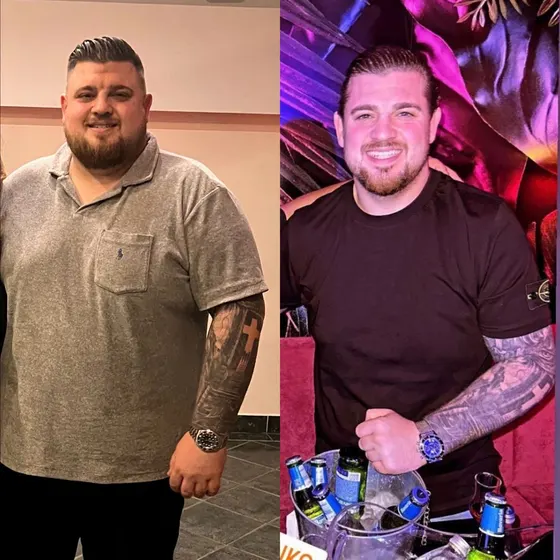
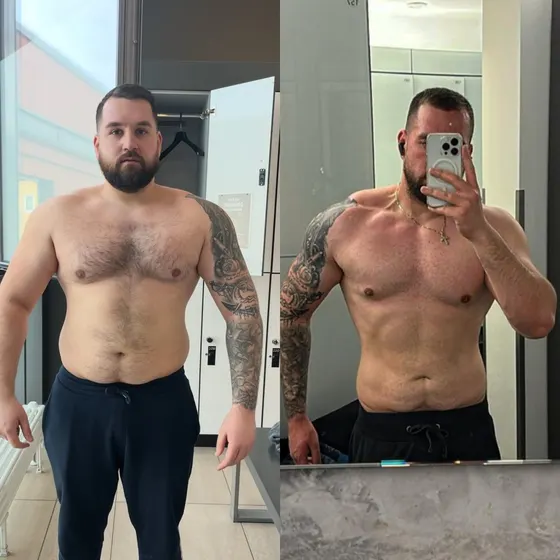
Within the first three months, Christos reduced his weight from about 96 to 84 kg. His abs became clearly more visible and his whole physique more defined. He was able to keep a large part of his strength; in some exercises he even got stronger thanks to the new training structure. At the same time, it was clear that a calorie deficit can temporarily affect energy and performance.
Afterwards: raising calories and holding his shape
Christos was happy with his definition and wanted to focus more on his strength performance. So we raised calories again and held his weight at about 84 kg over the following three months. In total we worked together for six months. His story shows that someone who already trains hard does not necessarily benefit from even more sets. It is often more useful to organise the load and to coordinate training, nutrition and recovery.
To me, this progress shows how important it is not to simply hand out a standard plan. Training, nutrition and recovery have to suit the individual person. Through regular check-ins and form updates, we can put the progress in context, answer questions and adjust specifically where needed. Long-term progress comes from a strategy that works in real everyday life.
Individual experience, not a guarantee of success. Your progress depends on your starting point, your daily life and how you put it into practice.