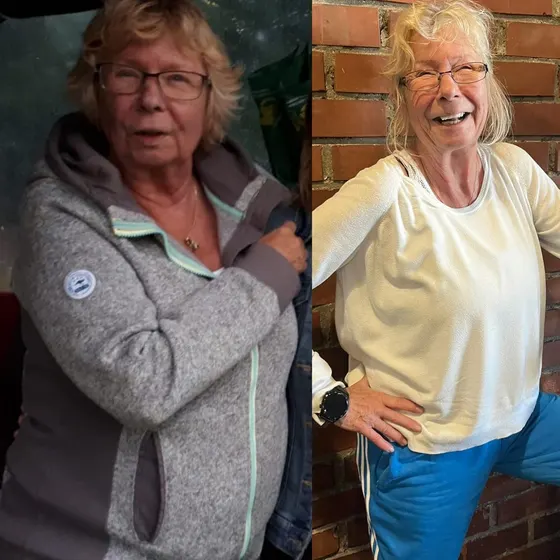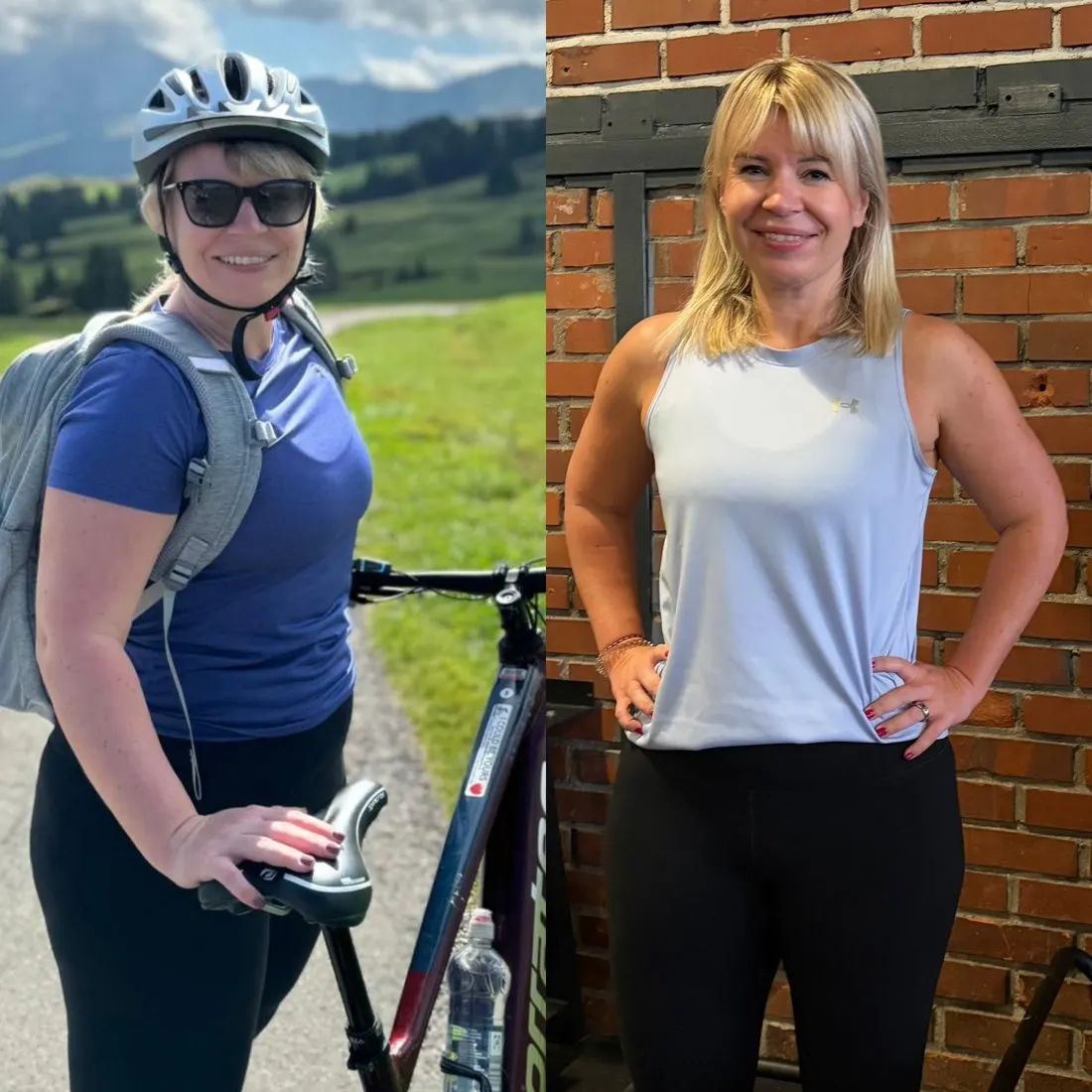
Starting point: weight going up, fitness going down
Barbara no longer felt comfortable in her body. Her weight kept rising, old clothes no longer fitted and she felt unfit. At the same time she was heavily committed at work in sales, often on business trips and at restaurant meetings. At some point she did not want to carry on like that.
Why her previous personal training did not work
Barbara had tried another trainer before. She found the sessions not demanding enough. As soon as she said she couldn't do any more, a set was often ended, even though with clean technique a few more repetitions might have been possible. With us she learned to really push herself and to judge her actual limit better. Technique and safety stayed more important than sheer exhaustion.
Eating between appointments and at restaurants
Barbara used to go for hours without eating on some working days and then grab whatever was available. On top of that came business dinners, high-calorie sauces, dressings and alcohol. We worked on plannable meals and better choices on the road: for example high-protein dishes, deliberately chosen sides and sauces on the side. She also learned to turn down alcohol at business dinners when it did not fit her goals.
Protein shakes as a practical travel solution
For long working days, Barbara now uses protein shakes when needed instead of snacking with no plan. This makes it easier for her to get enough protein and can help with satiety. Shakes do not generally replace full meals, but for her irregular schedule they are a practical tool.
The app: followed through from day one
A key success factor was nutrition tracking. From the first day, Barbara began to record her nutrition conscientiously in the app and put the targets into practice straight away. The visible numbers showed her how restaurant dishes, drinks and snacks affect her daily total. That meant we could not just estimate her calories and macronutrients but actually check them and adjust when needed. For Barbara, exactly this transparency was a major lever.
Fixed appointments create commitment
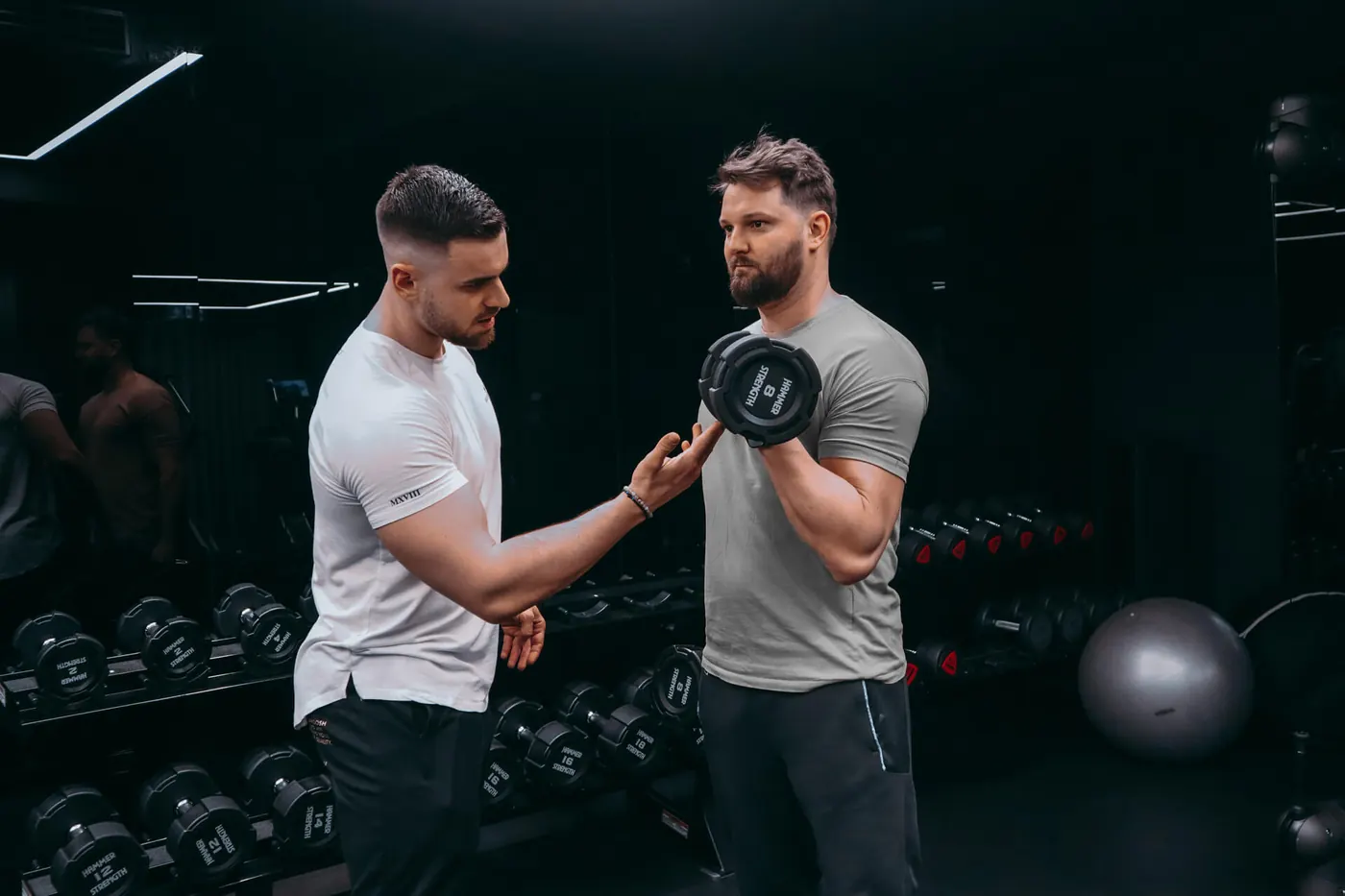
At first we trained about three times a week, with a focus on upper body, legs and glutes. Barbara knows herself that she would often not motivate herself to go to the gym alone. Fixed personal training appointments are therefore especially valuable for her. When she travelled, we adjusted appointments and talked through alternatives: a hotel gym, training on holiday, or at least more steps in daily life.
Her routine today
These days Barbara does about two strength sessions per week. Often a class comes on top, for example our Sweat & Punch at Landwehrstraße, or another group session. Occasionally she adds 15 to 20 minutes of cardio after strength training. We set her calorie intake so that her progress stays manageable in the long term.
Taking stress and hair loss seriously
During a particularly stressful period, Barbara also reported hair loss. In her coaching we took recovery, nutrition and load into account. I also discussed possible supportive measures and products with her. No proven effect on hair growth can be derived from this; hair loss can have many causes and should be checked by a doctor if symptoms persist. This sensitive section should only be published with Barbara's explicit consent.
The result: 14 kg and much better fitness
Barbara lost 14 kg in about ten months. She was already self-confident before; what has been added is mainly better fitness, more sporting activities with friends and more independent eating on the road. She is still training.
My conclusion
For Barbara, a perfect daily routine was not a precondition for success. What mattered were fixed training appointments, consistent app tracking from the first day and practical decisions while travelling. That way she was able to build a lasting routine despite changing schedules.
Individual experience, not a guarantee of success. Your progress depends on your starting point, your daily life and how you put it into practice.